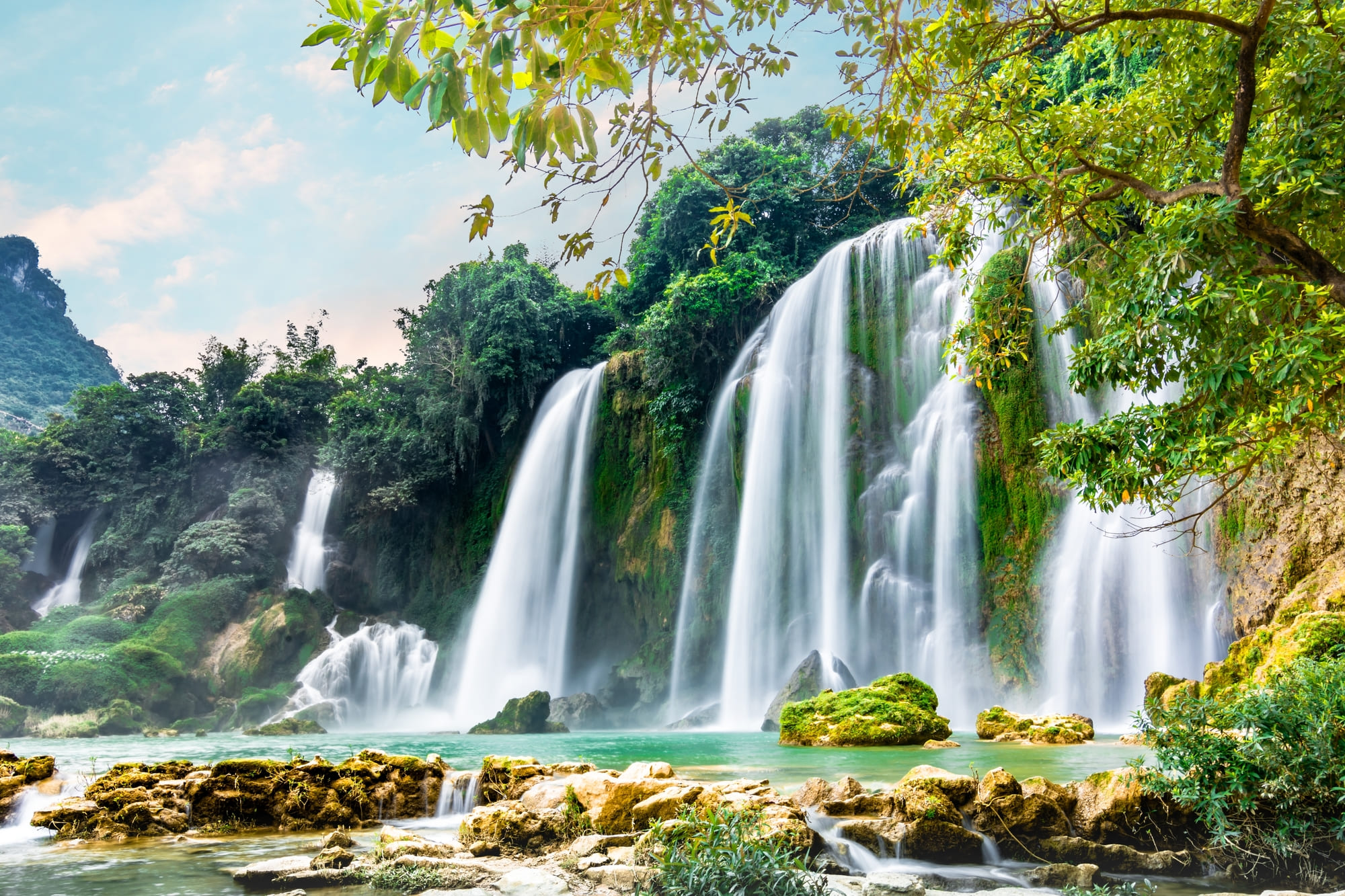
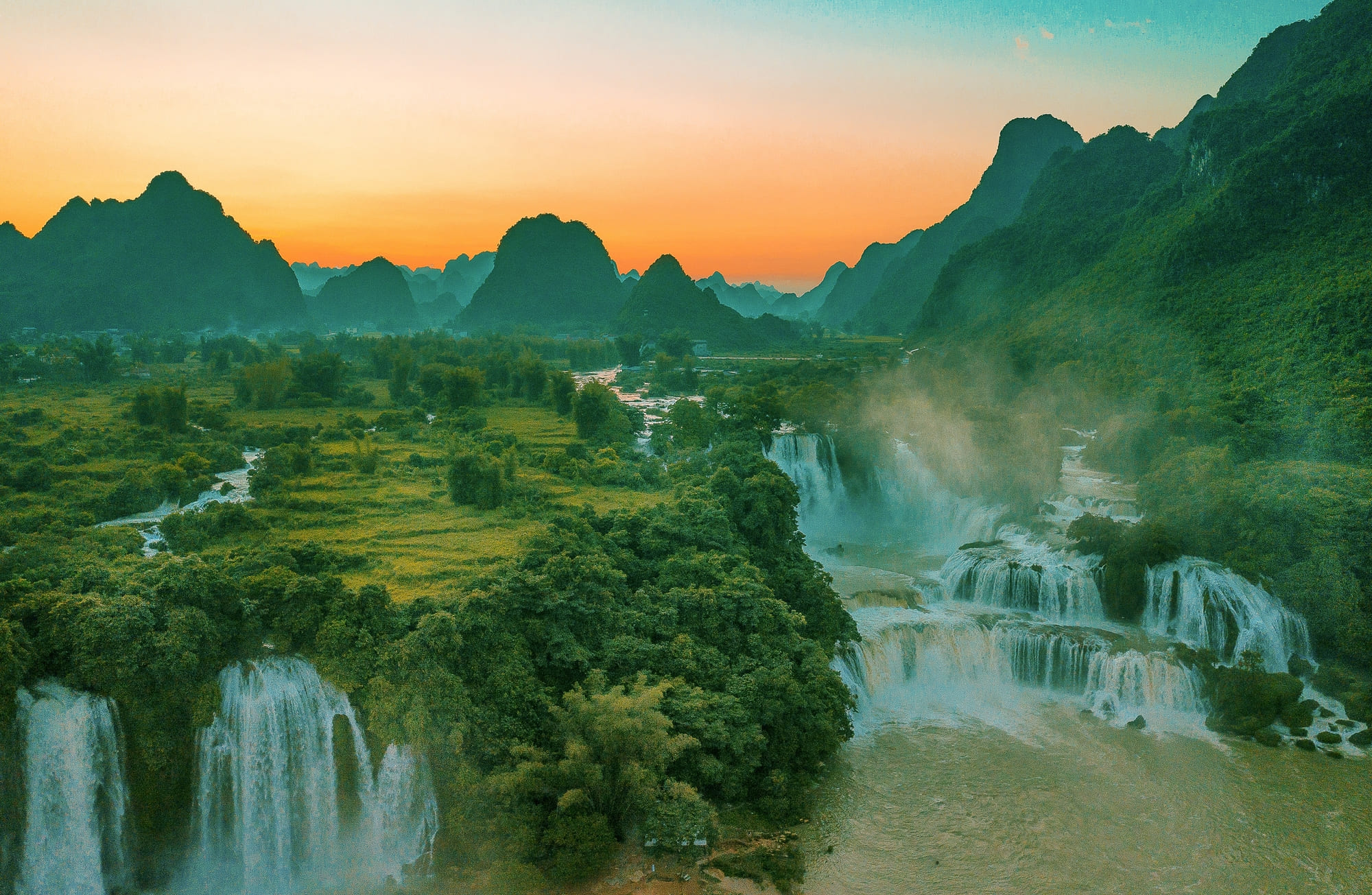
Few places in modern Southeast Asia feel truly undiscovered anymore, but Ban Gioc waterfalls still have that elusive sense of being completely unfound. Hidden deep within the forests of Vietnam’s northern highlands, straddling the border with China, the Ban Gioc waterfalls thunder from towering limestone karsts down successive rock tiers in an immense display of natural power and grace.
Breathtaking, inspirational, and calming, the mighty falls are surrounded by lush green forests, rice paddies and rugged mountains in a scene that wouldn’t look out of place in the classic Kung Fu blockbuster, Crouching Tiger, Hidden Dragon. And only adding to the atmosphere of the falls, bamboo boats float in the waters at their base, allowing visitors to get a close-up view of the waters crashing into the lake.
Also known as the Detian Falls, the Ban Gioc waterfalls are located between Daxin County of China, and Cao Bang province of northern Vietnam, around 270 km north of the nation’s capital, Hanoi. The waterfalls drop a total of 30 meters, and are divided on the way down into three separate water flows by rocks and trees; together creating a thundering sound effect that can be heard from far off. The Ban Gioc Falls are the 4th largest waterfall along a national border, behind Iguazu Falls, Victoria Falls, and Niagara Falls, easily placing them among the world’s greatest naturally occurring water features.
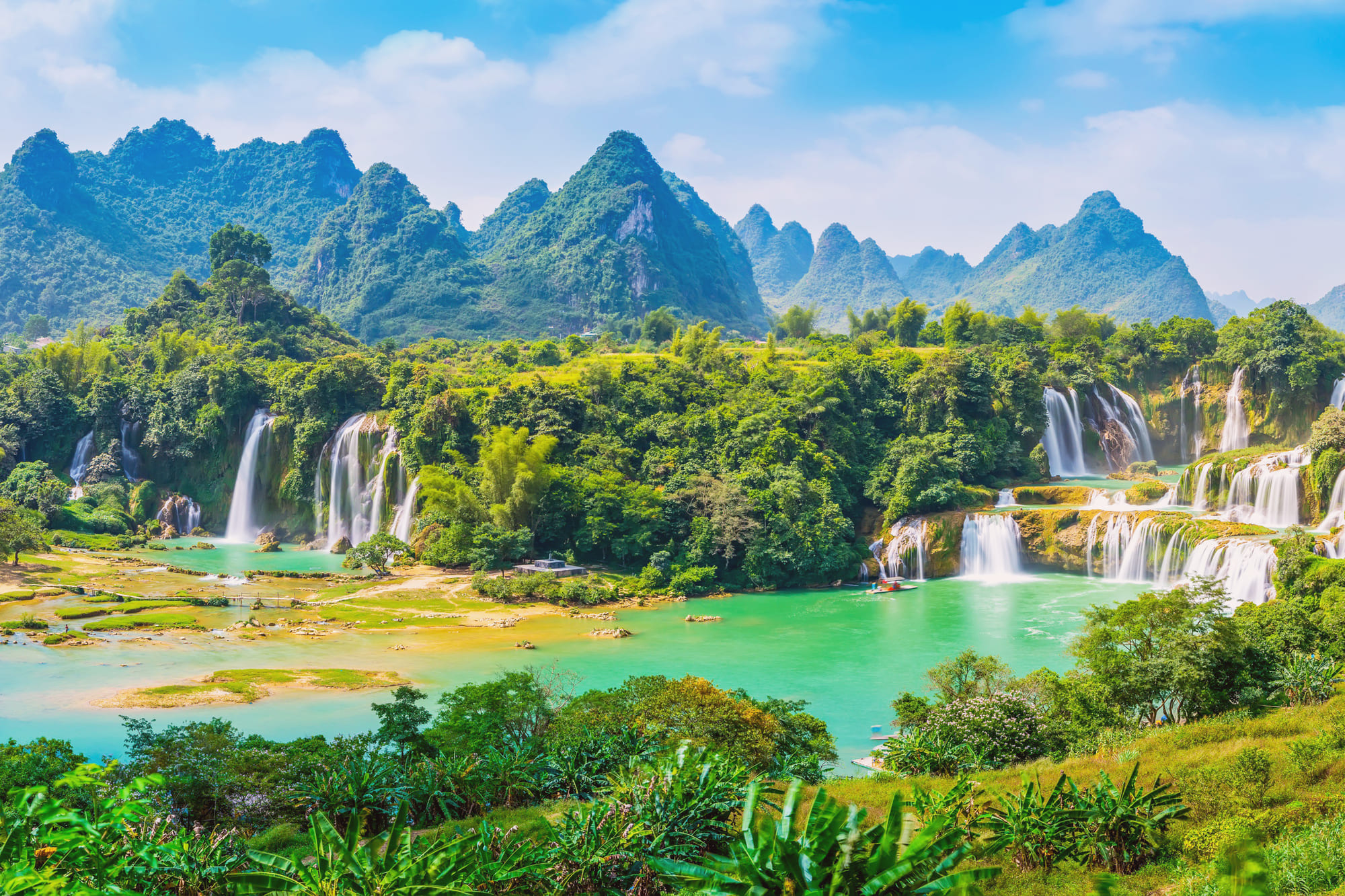
According to local Tay folklore, two lovers fled to the mountains near Ban Gioc waterfalls after they were forbidden to be together. After a great violent storm, the couple had disappeared, but twin waterfalls had appeared at the very spot where they had vanished; and so the waterfalls came to symbolize the forbidden lovers’ undying devotion.
And to this day, visitors at Ban Gioc are still told stories about the ill-fated Tay lovers whose spirits are said to linger in the mist that rises up from the cascades after a storm. As bamboo rafts drift beneath the giant falls, and the green rice paddies stretch away into the distance, it’s easy to see why generations of the local communities have woven romance and legend into one of Vietnam’s most spectacular landscapes.
A magical destination for nature lovers, photographers, and travelers with a passion for finding the hidden gems of a country, Ban Gioc waterfalls offer an interesting alternative to the usual attractions on the Vietnamese backpacker trail. So if you’re drawn to places to feel deeply connected to nature and the local culture, Ban Gioc should certainly be on your Vietnamese bucket list.
How To Get To Ban Gioc Falls, Vietnam
The easiest way for international visitors to reach Ban Gioc waterfalls is to fly into Vietnam’s main international gateway, the Noi Bai International Airport (HAN), outside Hanoi. The airport services frequent flights from around the world, with flights from London taking about 11 to 13 hours, 7 to 8 hours from Dubai, and just 3 hours from Singapore.
The Ban Gioc waterfalls are located on the northern Vietnamese border with China, so you’ll need to travel onwards to Cao Bang city – an ideal place to base yourself during your time in northern Vietnam. Cao Bang is about 280 km from Hanoi, and the drive takes roughly 6 to 8 hours, depending on traffic and local weather conditions.
The most convenient way to get to Cao Bang city is to hire a taxi or private driver to take you directly to your hotel. Otherwise you can catch a local bus or, if you don’t want to travel alone, you could join a guided tour group. Whichever way you choose, the costs are very affordable, and the route takes you through some spectacular scenery.
From Cao Bang city, it’s easy to take a day trip to the Ban Goic waterfalls, as well as lots of other regional attractions, including hiking trails, beauty spots, museums, temples, and more. The trip from Cao Bang city to Ban Goic waterfalls takes about 1.5 to 2 hours to cover the 90 km, and you can do this in a private tour or by local taxi.
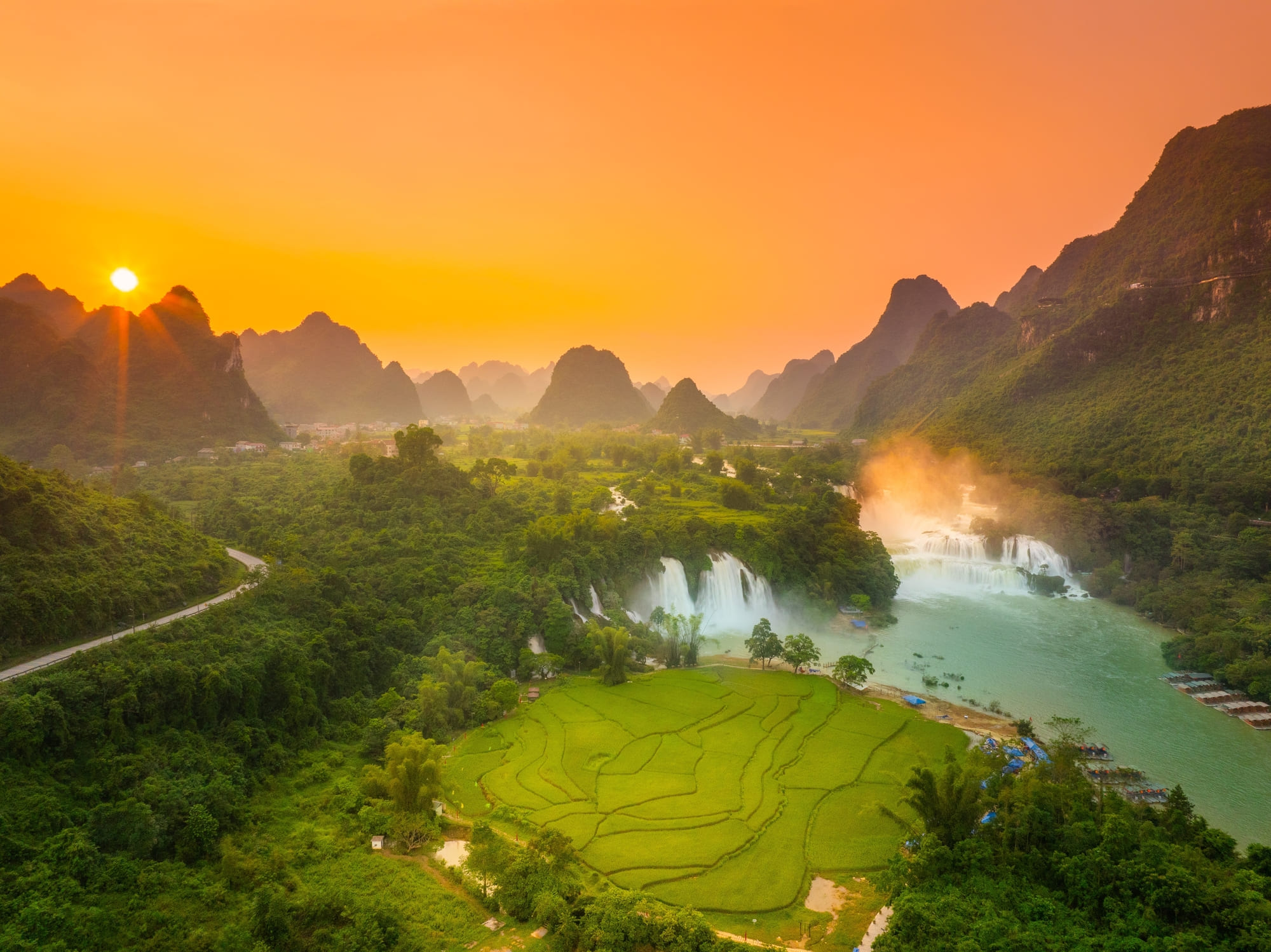
What’s the Best Time To Visit Ban Gioc Waterfalls, Vietnam?
Cao Bang province has a humid, subtropical climate with a distinct wet and dry season. The wet season runs from May to September, while the dry season is from October through April. Temperatures typically range from about 15 Degrees Celsius in the cooler dry months, from December to February, and shoot up to 30 Degrees Celsius during the hot wet months, between June and August.
The Ban Goic waterfalls are at their most impressive between September and October, right at the end of the rainy wet season. The heavy rains in the previous months mean that the waters crash down the rocks at their most powerful, while the landscape is also at its most vibrant. However, you will have to contend with a lot of mud in some places, and occasionally it can be difficult to travel around on the smaller rural roads.
Alternatively, if you visit during the dry season, between October and April, the falls won’t be quite as impressive, but the sky will be clear and the temperatures much cooler. Conditions during the dry season are ideal for hiking, site seeing, and generally exploring the region.
On balance, it’s probably better to visit Ban Gioc waterfalls during the dry season, although if you really want to see them at their most powerful, then you should time your visit for the tail end of the wet season.
What To Do at Ban Gioc and Cao Bang City, Vietnam
Stay at Mường Thanh Luxury Cao Bang Hotel, Cao Bang City
For visitors to Ban Gioc waterfalls, the most convenient place to stay is in Cao Bang city, at the excellent Mường Thanh Luxury Cao Bang Hotel. Situated right in the heart of Cao Bang city, on the Kim Dong pedestrian street, it’s just a stone’s throw from local markets, numerous restaurants, shops, and other city attractions. Combining 5 Star modern comforts with a superb location for exploring the city and nearby attractions, Mường Thanh Luxury Cao Bang Hotel is your home from home during your time in northern Vietnam.
Boasting an excellent range of amenities, including a large indoor pool, fitness center and spa, stylish on-site bars, lounges and an up-market restaurant serving Vietnamese and international cuisine. There’s also a 24 hour front desk, room service, and a multi-lingual staff on hand to help arrange day trips, activities, and your onward travel.
The rooms in the Mường Thanh Luxury Cao Bang Hotel are modern and spacious, with air conditioning, flat screen TVs, WiFi, minibar, ensuite bathrooms, and large windows that overlook the city. Some of the larger suites also have luxurious lounge seating areas and especially grand panoramic views.
All in all, the Mường Thanh Luxury Cao Bang Hotel is family friendly and also a great place for solo travelers if you’re concerned about safety in the smaller hostels. Furthermore, the superb location, friendly staff, and excellent amenities make the Mường Thanh Luxury Cao Bằng Hotel the city’s premier place to stay during your time in Cao Bang province.
You can find out more about the Mường Thanh Luxury Cao Bang Hotel, and reserve your rooms, on the official hotel website, here.
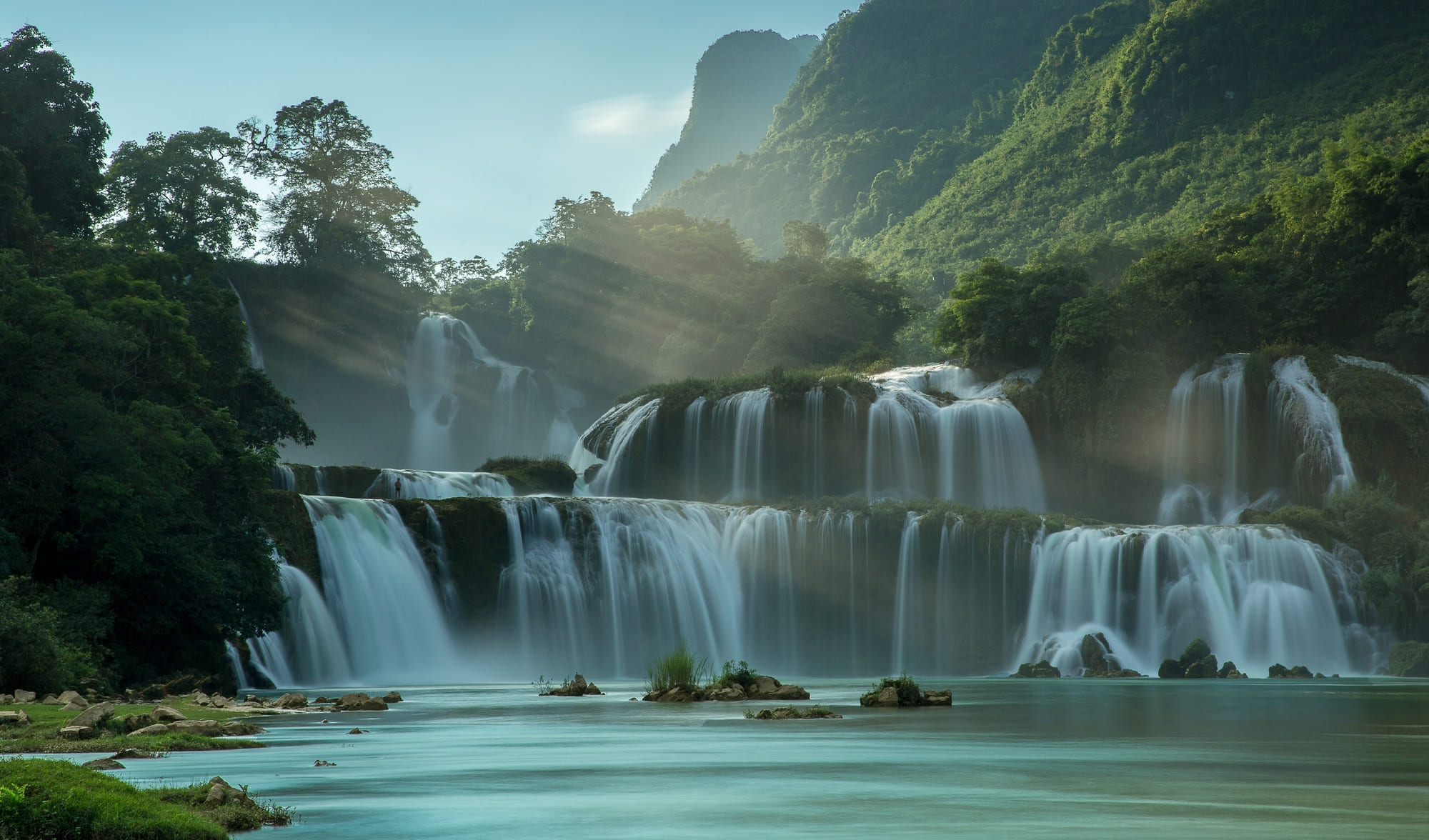
Visit Ban Gioc Waterfall, Nguom Ngao Cave, Truc Lam Zen Monastery, with Traditional Vietnamese Lunch, on a Private One Day Tour
This guided day trip is the perfect way to experience the magic of the Ban Gioc waterfalls, starting the day with a pick up from your hotel in Cao Bang city. You’ll drive out through the UNESCO-recognised Non Nuoc Cao Bang Global Geopark in an air conditioned vehicle with your guide telling you about the sites you see along the way. The Geopark is famous for its stunning mountains, forested valleys, traditional villages, and the star attraction, Ban Gioc Waterfalls.
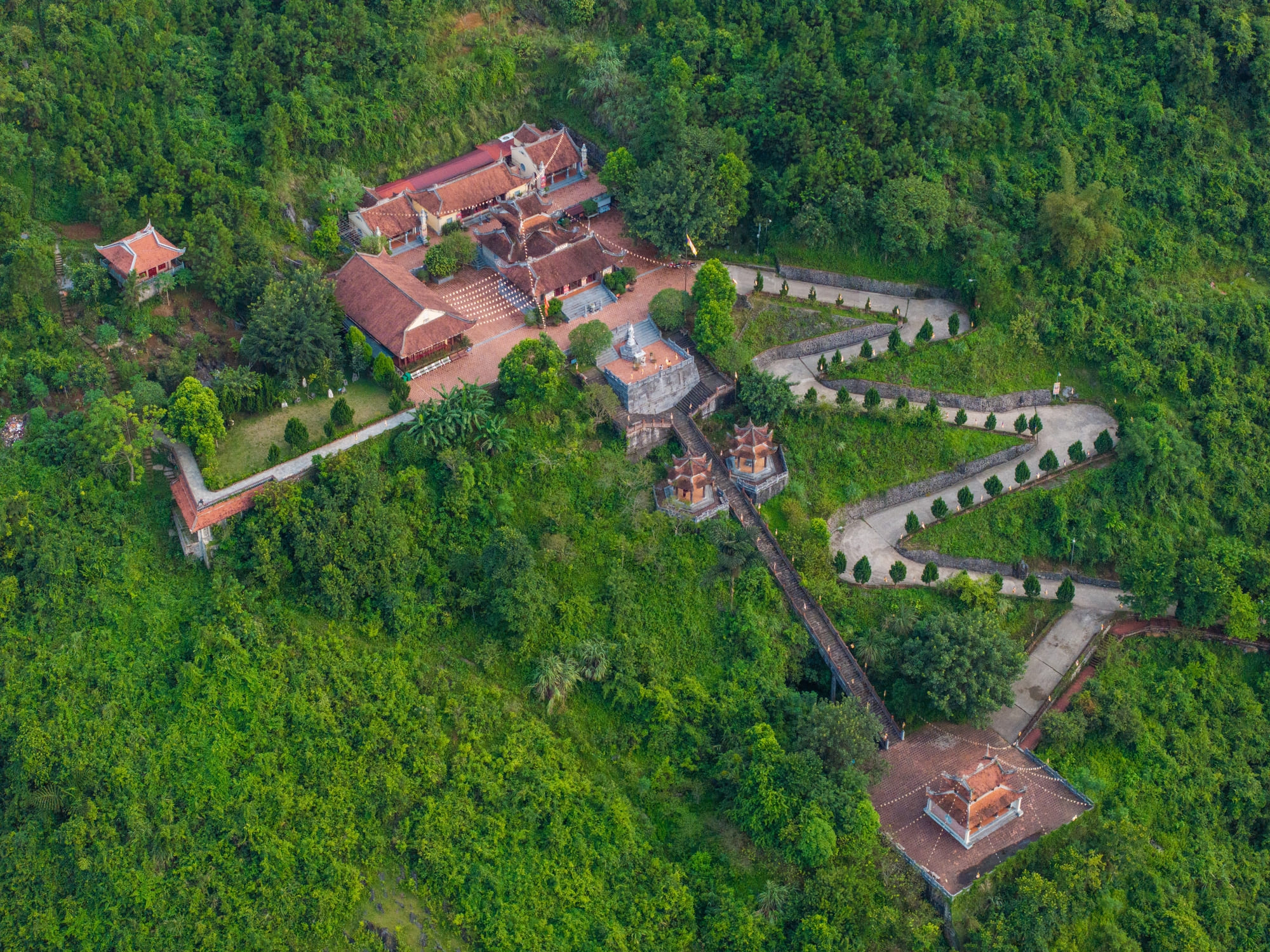
After a pleasant drive, you’ll explore the Ban Gioc waterfalls; with plenty of time to wander around, splash in the water, and ride on the bamboo boats to get right up close to the thundering waters that crash into the lake. You’ll also visit other local attractions, including the hauntingly beautiful Nguom Ngao Cave, the Truc Lam Zen Monastery, and Angel Eye Mountain.
The tour includes a delicious lunch at a local restaurant, where you’ll taste the very best of traditional Vietnamese food, with delights such as duck noodle soup, sour noodles with vegetables, and Cao Bang rice paper being particular favorites. Finally, you’ll visit a local village to get a sense of some of the tribal traditions that still play a big part in the life of communities in Cao Bang province.
At the end of an exciting, action packed day, you’ll be dropped off back at your hotel in Cao Bang, with enough time to freshen up before your evening meal.
You can find out more about the private day tour to Ban Gioc waterfalls and other regional attractions, and book your places for the trip, here.
Eat at GILU’s Garden Cafe Restaurant in Cao Bang City
This laid back cafe restaurant is something of an iconic establishment in the city, famed for its relaxing atmosphere, top quality cuisine, and excellent service. Set alongside the river, its beautifully designed garden space perfectly complements the restaurant with its ambient lighting, pot plants, and modern decor. The ideal place to celebrate a special occasion, or simply one of the best places in town to grab a bite to eat.
GILU’s Garden has a varied menu that includes Vietnamese, Korean, Japanese, and European cuisine, as well as interesting fusion dishes. Open for breakfast, lunch and dinner, some of the most popular items on the menu include the delicious breakfast platters, freshly made sandwiches at lunch, and grilled meats and south Asian-style curries, as well as mouth watering handcrafted desserts. There’s also all the Western classics on offer, such as pasta, burgers, and a good selection of ice creams.
The calm riverside setting and home-made style cuisine make this family-friendly restaurant a must-visit during your time in Cao Bang.
You can find out more about the latest specials on the menu, and reserve your table at GILU’s Garden, here.
Visit the Phia Thap Incense Making Village
Phia Thap is a traditional Vietnamese village whose residents have been making incense for many generations. Representing a symbolic purification of the self, and the spreading of gentle compassion, incense plays an important role in the life of Buddhists, and is constantly burning in the monasteries, temples, and shrines.
Located in the Quang Uyen District, just outside of the Cao Bang city, Phia Thap welcomes visitors who are interested in learning more about the authentic way that incense is made. You can walk through the village, observing the daily routines and methods of incense making, and at the end you can purchase handmade incense directly from the artisans, thereby helping to support their work.
You can see every part of the production process for making incense – which is surprisingly complex – from preparing the bamboo sticks to the mixing of the fragrant natural powder coatings, to the shaping and finally, the drying of incense bundles in the sun. In fact, on a sunny day, much of the village is transformed into a landscape of bright red and pink bundles of incense that look like fans. The experience is hugely rewarding for cultural travelers, photographers, and anyone who wants to connect with the authentic rhythms of life in Cao Bang.
Most visitors stay for a couple of hours, which is enough to explore the village and get a real sense of the process. Just remember, this is a real working village, so it’s good to be respectful of the people and try not to get in the way of their work.
The village is about 45 minutes to an hour’s drive from Cao Bang city, so the best way to get to Phia Thap is by hiring a private driver or taking a taxi. The easiest way to do this is to simply ask at the front desk of your hotel and the staff will be happy to help you to arrange the transport to and from the village.
Explore the Cao Bang Central Market
As a lively cultural hub of the city, the Cao Bang Market is a place where people go to shop, socialize, and generally enjoy the bustling atmosphere all through the day and night. And while the market is a big attraction for tourists, it’s also a mainstay for the local people of the city and surrounding areas.
The market is a feast of colours, sights, and sounds, with stalls that sell everything from hand-made textiles and clothes, to mountain herbs, bamboo shoots, fruits and vegetables, and a delicious range of street food, including grilled meats, sticky rice, and more! There’s no need to schedule your trip to the market; instead, simply turn up and follow your feet to see where it leads you.
The market is open from around 6 am to 11.30 pm each day, so you can drop by at any time that you have a spare afternoon or morning on your itinerary.
Located right in the center of the city, you can easily walk to the market from your hotel or, alternatively, jump in a taxi to be there within minutes. If you’re unsure of how to get to the market, simply ask the staff at your hotel, or a taxi driver in the city.