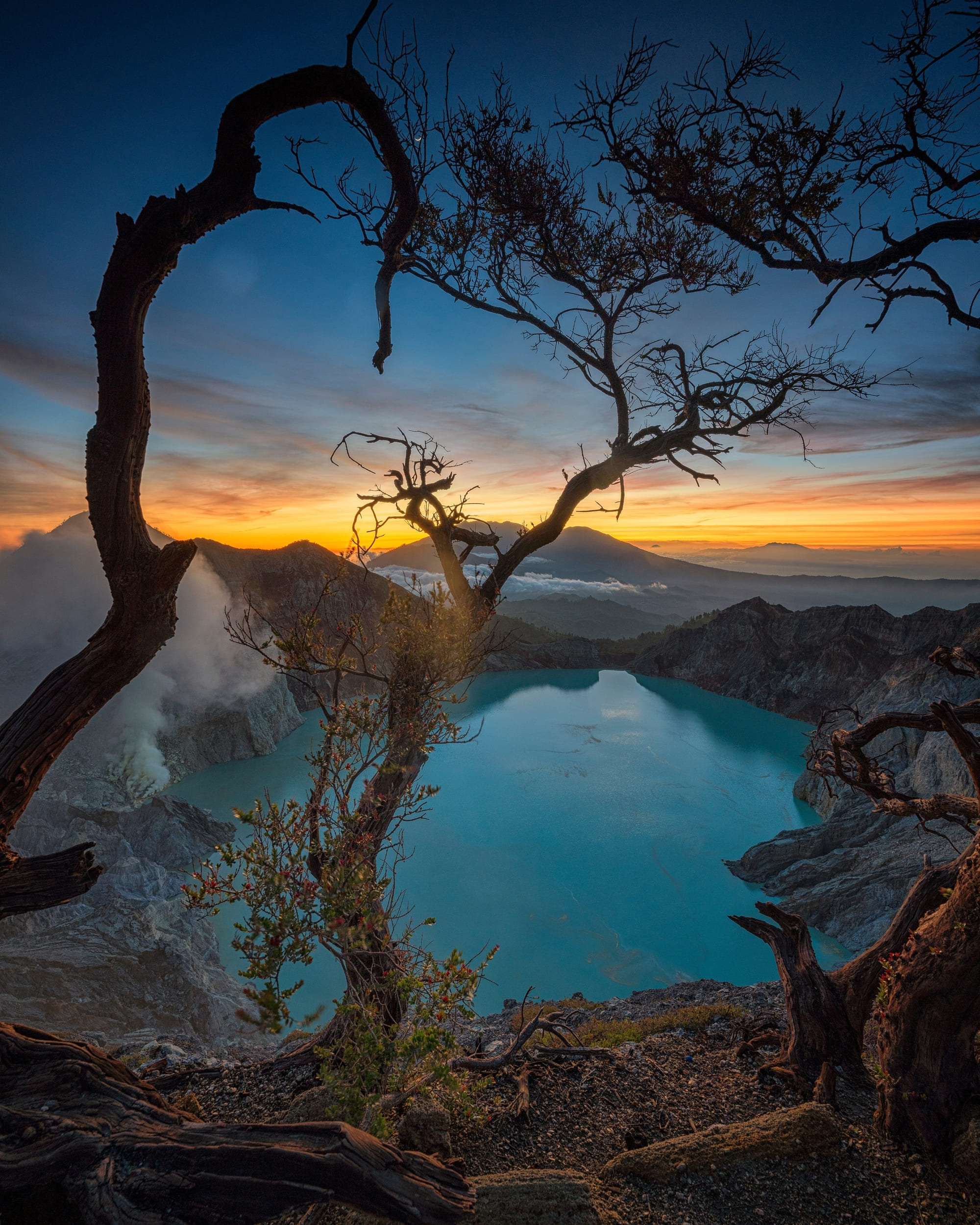
Each day as dawn breaks over the Kawah Ijen volcanic crater in East Java, an astounding natural phenomena unfolds. As small groups of hikers stand looking down into the volcanic crater, ethereal blue flames dance across the waters below. This reality-defying display of ‘blue fire’ emerging from the crater lake is caused by ignited sulphuric gases that are vented from volcanic rifts at temperatures of more than 600 Degrees Celsius. As these volcanic plumes of gas come into contact with the air they burst into flames, creating the famous ‘blue fires’ of Kawah Ijen volcano.
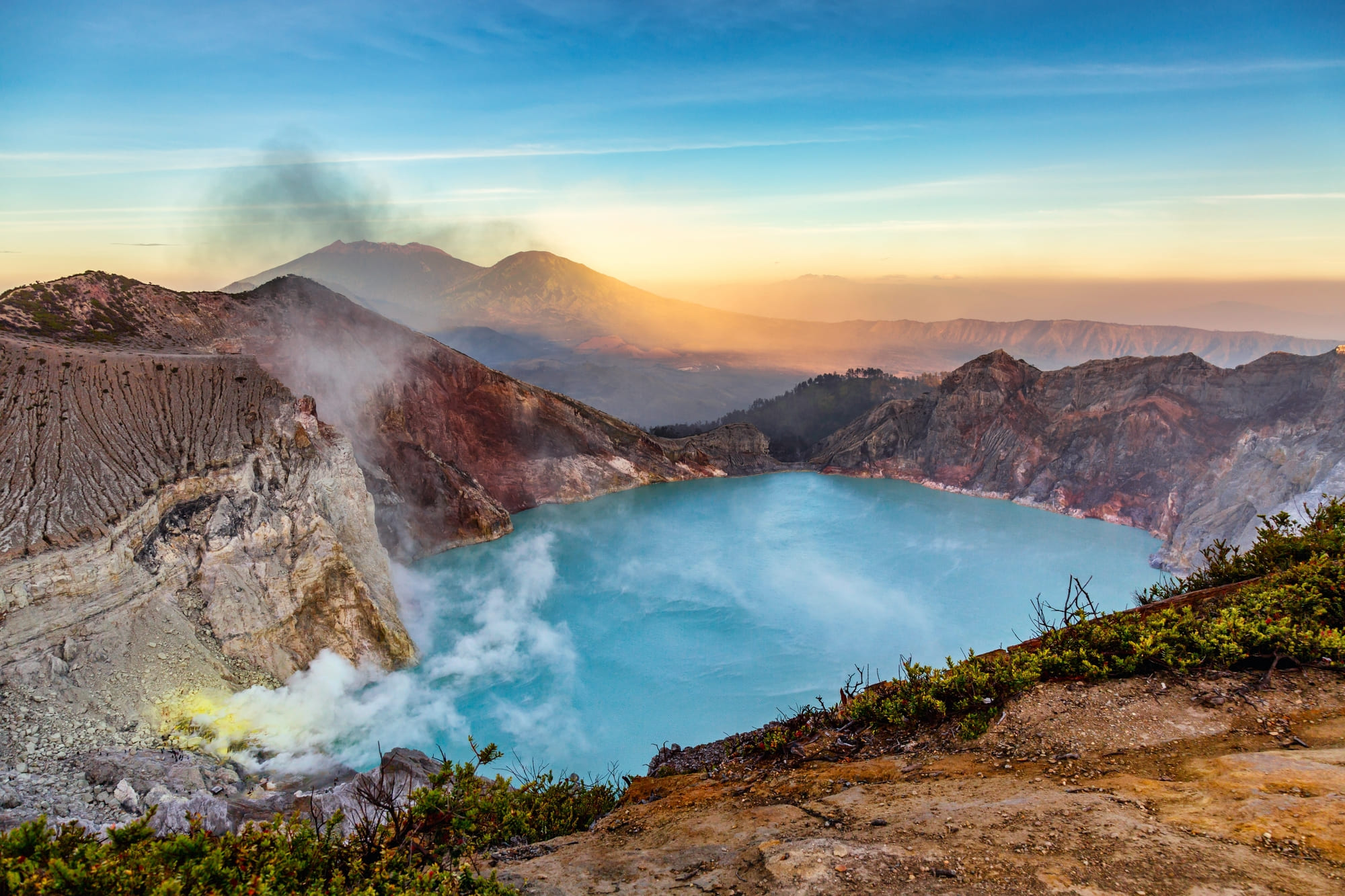
Rising up from within the larger Ijen volcanic complex in East Java, the Kawah Ijen contains one of the most highly acidic crater lakes in the world. The bright blue, sulphuric lake is carved out of the rugged jungle landscapes, surrounded by hiking trails, coastal panoramas, and forests that are bursting with tropical flora and fauna. There are very few places on Earth that feel so genuinely otherworldly, like the ‘Land that Time Forgot’, and Kawah Ijen in East Java, Indonesia, is one of the most stunning of these.
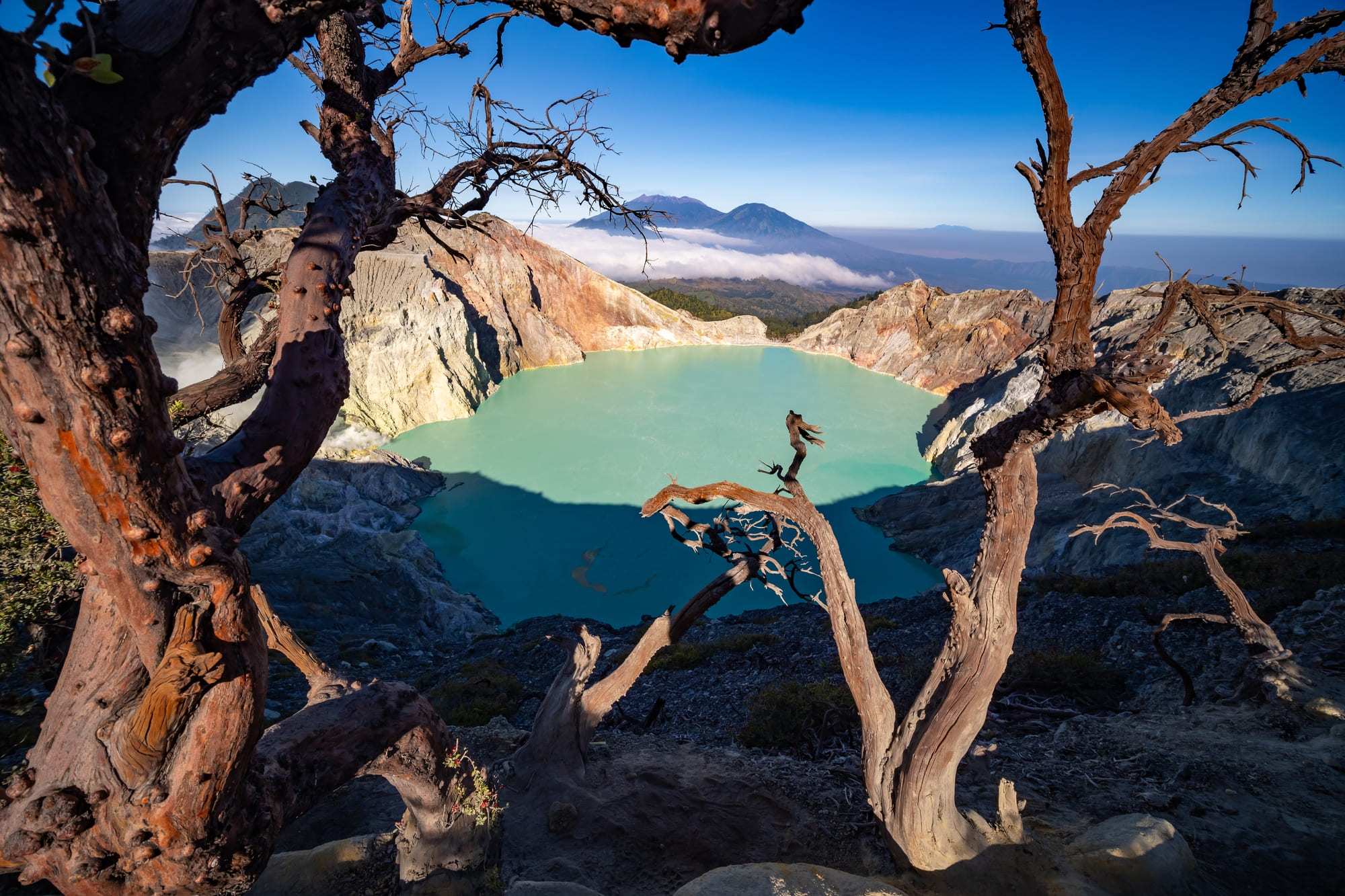
At the center of the active volcano, the sulphuric crater lake is so acidic that it can dissolve soft metals – which means there’s definitely no swimming in the waters! During the night, the waters glow with shifting blue flames; and by day, the scene transforms into a stark panorama, with steep volcanic slopes and drifting plumes of yellowish sulphuric smoke. This means that the blue flames are only visible at night, since during the day the bright sunlight hides them from sight – although they are still there.
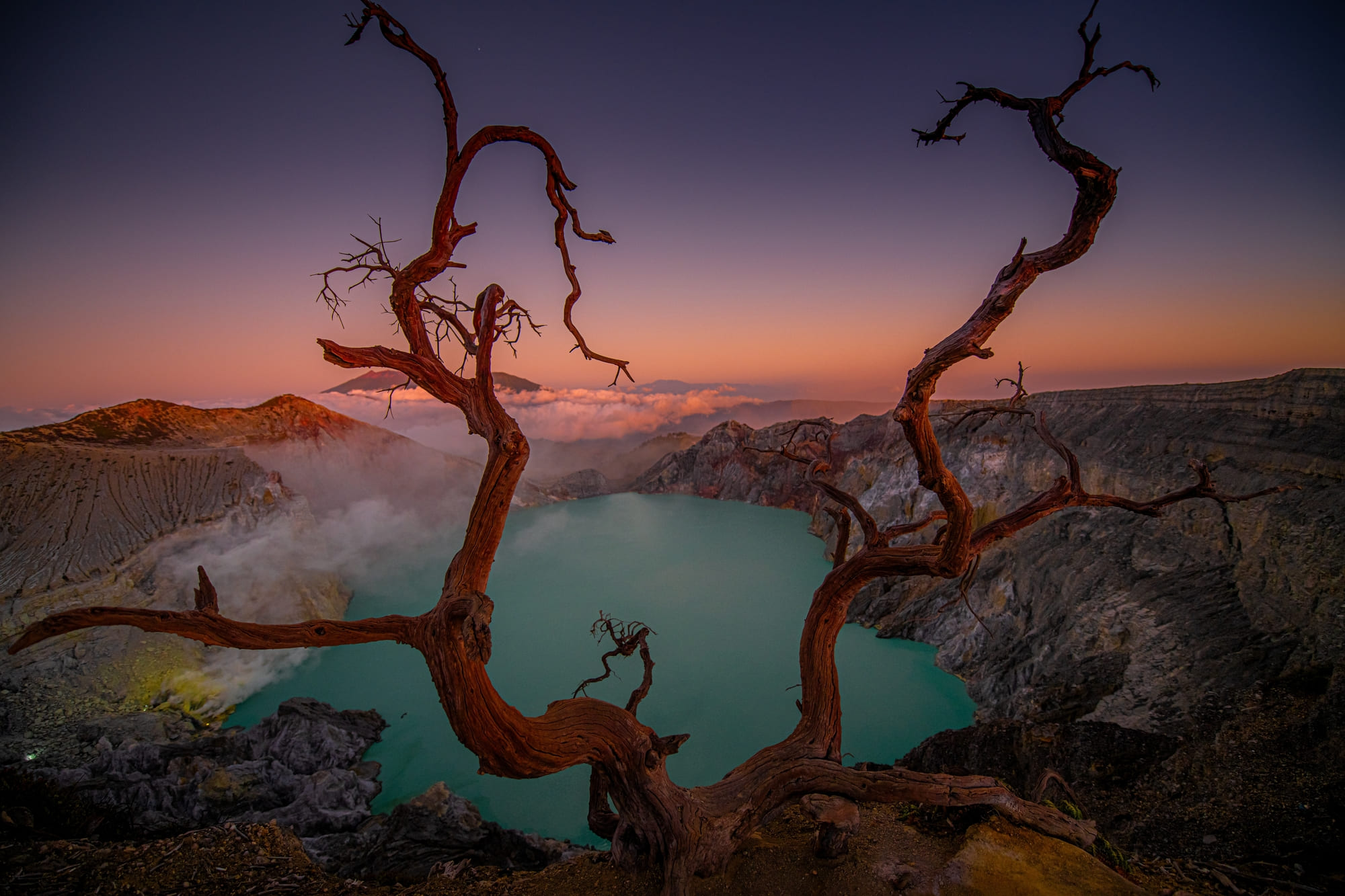
And this remarkable scene is the most beautiful just before dawn, attracting photographers, curious travelers, and visitors who want to experience this awe-inspiring vista for themselves. So hikers set out in the middle of the night, armed with head torches, and trek through the jungles with their guides to reach the Kawah Ijen just before the sun rises. As they look down over the lip of the crater, they watch in hushed awe as the enchanting display of blue flames bursts forth across the waters.
A visit to Kawah Ijen is not just a unique travel experience, it feels more like stepping out onto a different planet, where the raw forces of the earth are laid bare for all to see.
How to Get To Kawah Ijen, East Java, Indonesia
For international visitors to Kawah Ijen, you’ll need to fly into the Ngurah Rai International Airport (DPS) in Bali, before traveling onward to the town Banyuwangi. You can catch an international flight to Bali from most global travel hubs; with flight times from London averaging 16 to 20 hours, 9 to 10 hours from Dubai, and 22 to 26 hours from New York.
Once you arrive in Bali you’ll need to travel onwards to the town of Banyuwangi, a coastal town in East Java within easy striking distance of Kawah Ijen volcano. Banyuwangi has a good selection of hotels and restaurants, as well as great beaches and other areas of extreme natural beauty to explore.
The fastest option is to catch an onward domestic flight direct from Ngurah Rai International Airport (DPS) to Banyuwangi International Airport (BWX). The flight takes about an hour and has great views as you fly over the Bali Strait – so try to get a window seat if you can.
Alternatively, you can take the ferry from Gilimanuk Port in western Bali to the Ketepang Port in Banyuwangi, East Java. You’ll need to catch a taxi from Ngurah Rai International Airport to the ferry port which will take about 3 to 4 hours. The ferry crossing takes about 45 minutes and gives you some fantastic photo opportunities of the coastal scenery as you come in to dock in Banyuwangi. After you arrive at the ferry port in Banyuwangi, you just need to catch a taxi to your hotel in town.
From Banyuwangi, it’s a 1.5 hour drive to the start of the Ijen hiking route. And then to see the ‘blue fire’ you’ll need to hike through the night to view the active volcanic crater before the sun rises. To visit Kawah Ijen you’ll need to join a guided tour because it’s too dangerous to attempt the journey on your own without proper safety equipment and guidance from an experienced local guide.
What’s the Best Time To Visit Kawah Ijen, East Java?
East Java has a tropical climate with a yearly wet and dry season. Temperatures in the region remain hot all year round, and range from about 25 to 33 Degrees Celsius during the day, with temperatures dipping to around 10 to 15 Degrees Celsius at night.
The best time to visit Kawah Ijen, and the surrounding areas, is during the dry season, which runs from May through till October. During these months, the skies are clear and blue, the visibility is good, and the conditions are much safer and more reliable for hiking and sightseeing. The dry weather conditions also increase your chances of seeing dramatic sun rises and sun sets – a big plus for photographers.
The ideal months to visit are between June and August, when the weather is at its finest. However, this is also a busy period for tourism – so if you want to avoid the crowds then you should time your visit for the shoulder seasons, in either May or September.
The wet season, between November and April, is still a good time to visit the region. But there is frequent rain, visibility is usually very low, and it can get extremely humid. Of course, you’ll be able to grab some great deals on flights and hotels, so it can be a good option if you’re traveling on a very tight budget.
Even so, the best time to visit Kawah Ijen is during the dry season. It’s worth remembering to bring a few extra layers with you, because even though the weather is pretty hot it can quickly cool down at night or if you’re hiking at higher altitudes.
Things to Do at Kawah Ijen And Banyuwangi, East Java, Indonesia
Stay at the Ketapang Indah Hotel, Banyuwangi
Covering 8 hectares of beach front property, this luxurious coastal resort offers visitors some of the top accommodation in Banyuwangi, East Java. With spectacular views across the Bali Strait, a private black volcanic sand beach lined with palms, and a whole host of onsite amenities, Ketapang Indah Hotel combines upmarket contemporary refinement with traditional Javanese hospitality and decor.
The resort has superb amenities, including a large outdoor swimming pool, beautiful tropical gardens, world-class dining at the Marlin Restaurant & Beach Club, and numerous outdoor spaces for relaxing in the sun while taking in the ocean views. And with a 24 hour front desk, airport shuttle service, free WiFi, and on-site car hire services, the Ketapang Indah Hotel is an excellent base for exploring Banyuwangi and the surrounding area.
From single rooms to opulent ocean view suites, all rooms have air-conditioning, free WiFi, en suite bathrooms with complementary toiletries, a flat screen TV with satellite channels, and a private balcony or terrace. The rooms are very reasonably priced, have good sea views, and are suitable for couples, families with children, and solo travelers.
The perfect home from home in East Java, the Ketapang Indah Hotel has a friendly team of staff who can help to arrange activities, order taxis, and assist with your onward travel. A restful haven for couples seeking a romantic retreat, families with children who need the extra space, and adventurous travelers who prefer to have a comfortable base near the city center.
You can find out more, and book your rooms at the Ketapang Indah Hotel on the official hotel website, here.
Hike to Kawah Ijen and See the ‘Blue Fire’ in the Volcanic Crater at Dawn
This overnight adventure starts with a hotel pickup between 11pm and 12.30 am, after which you’ll be driven out towards Paltuding, the main gateway to the Ijen hiking route. Then you’ll have a quick health check and be provided with safety gear, including a gas mask for the volcanic crater, before setting out on the trail.
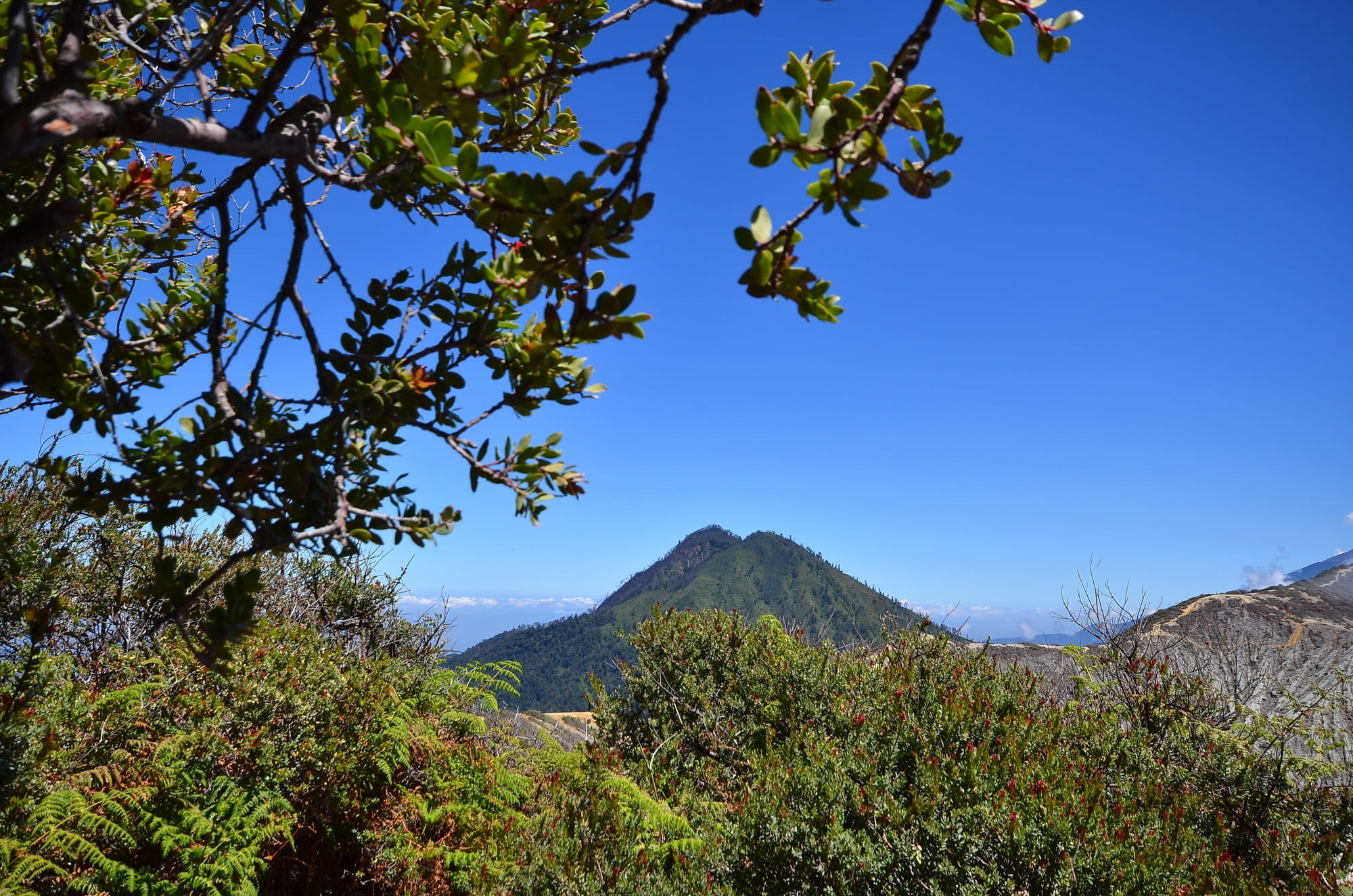
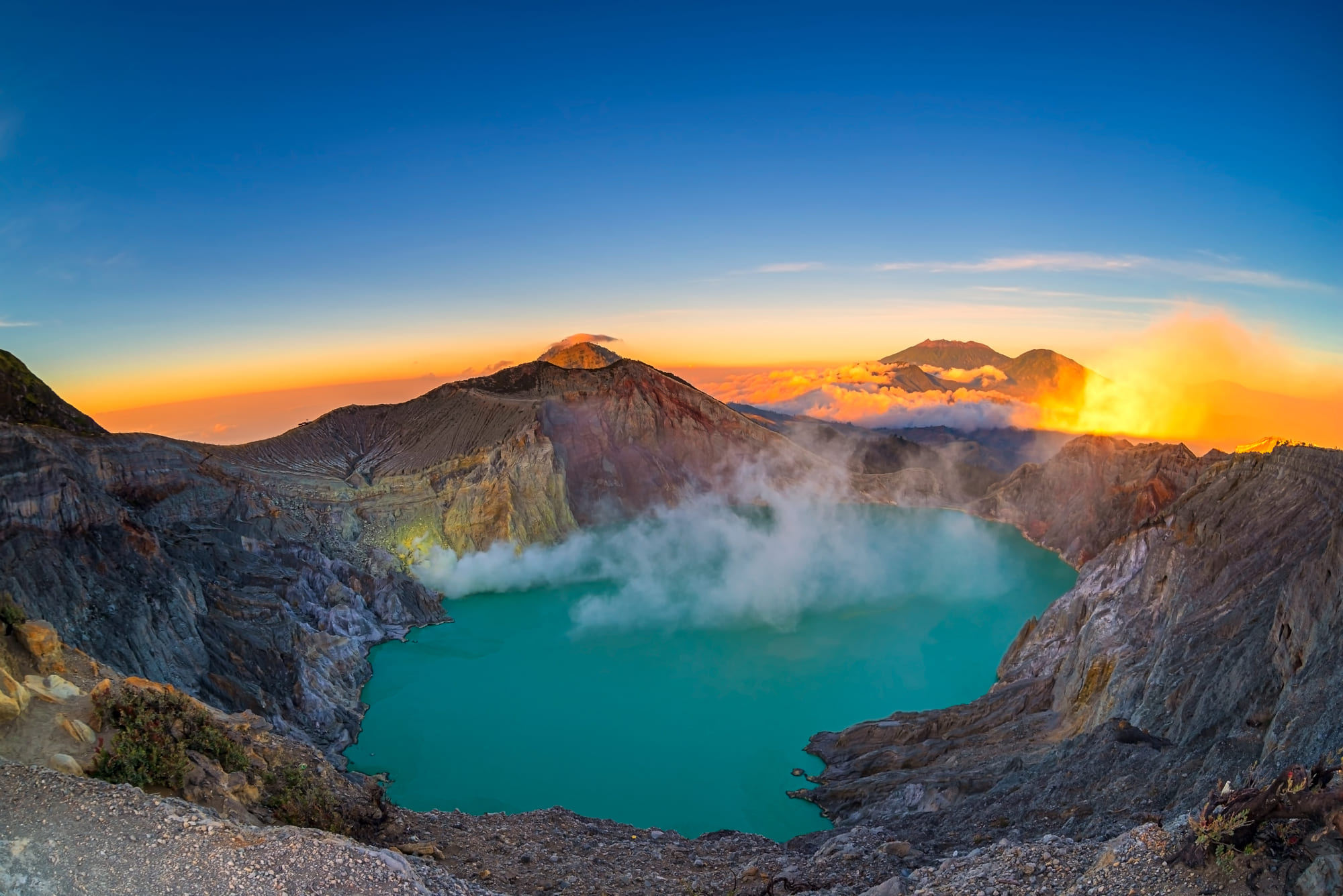
The trek to Kawah Ijen follows a mountain route through deep forests and dramatic volcanic terrain. And although it’s dark, your guide will ensure you traverse the route safely! You’ll reach the edge of the volcanic crater of Kawah Ijen in the hour or so before dawn, giving you plenty of time to take in the astounding sight of the blue flames dancing across the surface of the sulphuric waters of the crater lake.
As the sun rises the landscape slowly transforms – with the blue flames no longer being visible. Instead, you’ll see the rugged cliffs of the volcanic landscape with thick yellow clouds of sulphur drifting rising up from the volcanic vents in and around the greenish-blue waters.
You’ll then be guided back to Paltuding base camp for a well earned break where you can grab a hot drink or a bite to eat before you’re driven back to your hotel in Banyuwangi.
You can find out more about this exciting night trek to Kawah Ijen volcano, and book your places on the tour, here.
Visit the Museum Blambangan to Explore Banyuwangi’s Cultural Heritage
As the most important museum in the region, you can dive deep into the history, archaeology, and cultural heritage of Banyuwangi and East Java. Although housed in a modest building, it’s packed full of fascinating exhibits that include ethnographic artefacts and displays, traditional tools of the region, lovely ceramics, and unique historical documents that reflect the development of the local society from pre-colonial times right through the modern era in Indonesia. There’s also displays of traditional jewelry, textiles, and musical instruments in this cultural treasure trove.
The staff at the museum are very helpful, and if it’s quiet they’re happy to show you around some of the highlights of the museum. An interesting glimpse into the life of the community, both past and present, the Museum Blambangan is a great compliment to the natural beauty and beach scenery that most visitors focus on. A great idea for a half day trip that’s fun for families, couples, and any travelers who are interested in learning more about the culture of their host community in Banyuwangi.
Located on Jalan Jenderal Ahmad Yani, in the city center, it’s super easy to order a taxi to the museum, direct from your hotel. You can find out a bit more about the Museum Blambangan, here.
Take a Guided Safari Day Trip to Baluran National Park – The ‘Africa of Java’
This 7 hour guided wildlife tour of Baluran National Park starts with a hotel pickup to take you out to the beautiful Bama Beach, where the ocean waters meet the dense mangrove coastal ecosystem. You’ll enjoy the peaceful scenery while looking out for wild monkeys and diverse birdlife on the shoreline.
Next, you’ll drive out to the Bekol Savannah of the Baluran National Park – the highlight of the tour. You’ll safari amongst the free-roaming wildlife to see herds of Banteng – a species of local buffalo – as well as deer, peacocks, civets and even the occasional monitor lizard, among many others! Nick-named the ‘Africa of Java’, this is a safari tour like no other with the stunning views of Mount Baluran, a dormant volcano, in the distance.
The tour includes refreshments, snacks, and hotel pick up and drop off; and all the while your guide will teach you all about the ecosystems and inhabitants of this beautiful area of pristine coastline and savannah.
You can find out more about the half-day safari tour of Baluran National Park, and reserve your spots on the trip, here.
Eat at the Casabanya Restaurant & Bar on the Banyuwangi Beachfront
Set alongside the stunning coastline of Banyuwangi in the Dialoog Hotel, the Casabanya Restaurant & Bar is open all day for breakfast, brunch, lunch, and dinner. With comfortable outdoor seating and an open terrace that looks out over the ocean, you can sample the drinks at the cocktail bar, enjoy a sunrise breakfast, or a multi-course gourmet dinner in the luxurious surroundings.
Serving a superb range of local Indonesian cuisine as well as gourmet standard international favourites, it’s the ideal place to unwind and enjoy a delicious meal as you watch the waves roll in across the Bali Strait. Some of the highlights on the menu include the local classic Sambel Terong Udang, fresh caught ocean shrimp, pan grilled salmon, chicken parmigiana, and the seafood pasta, as well as a whole range of fusion dishes and seasonal offerings.
The restaurant’s ambience is calm, romantic, and peaceful, so it’s a good choice for a slow dinner or a casual lunch time meal. A lovely place to unwind after a day of sightseeing, you should definitely consider stopping by the Casabanya Restaurant & Bar during your time in Banyuwangi.
You can find out more about the Casabanya Restaurant & Bar and check out the menu at the official website, here.